


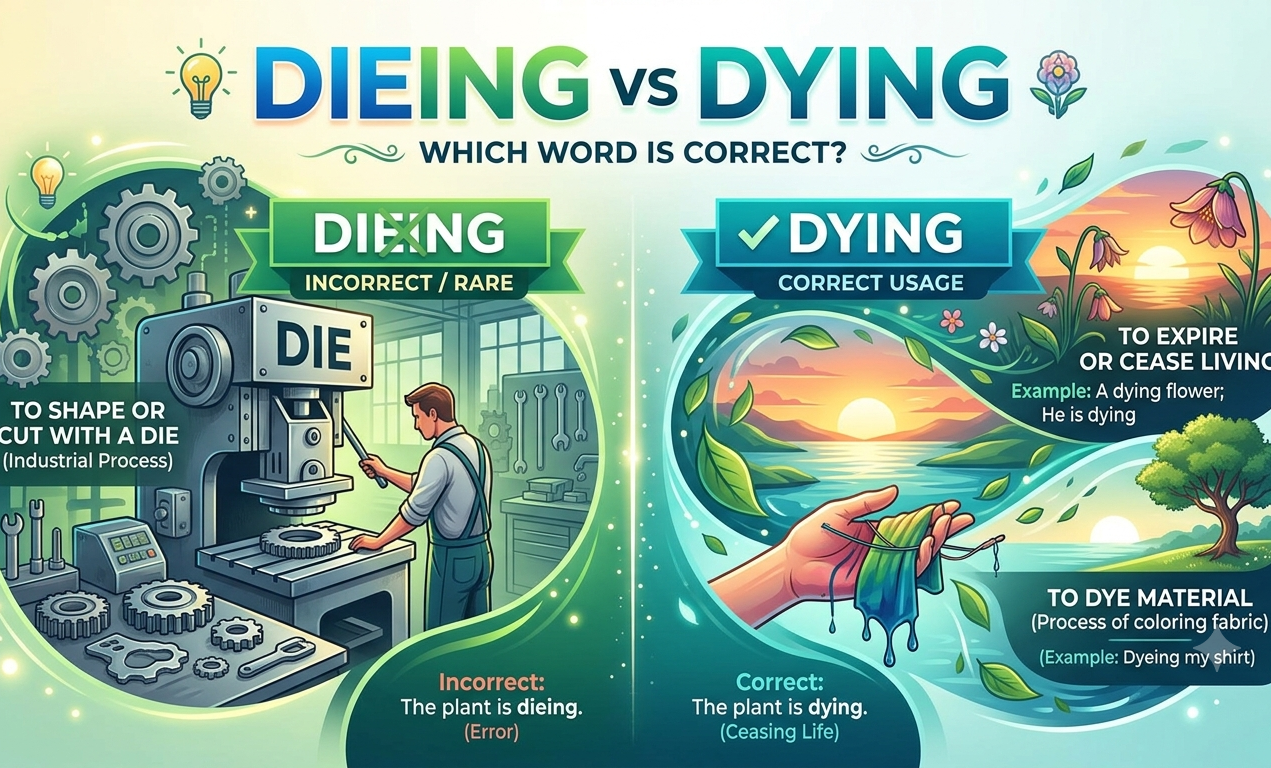
English is filled with words that look similar but carry completely different meanings. Among the most commonly confused examples is “dieing vs dying.” At first glance, the two words appear almost identical. In fact, many people assume that “dieing” is simply a misspelling of “dying.” However, the truth is a little more interesting.
The confusion often occurs because both words originate from the word “die,” yet they are used in completely different contexts. Whether you’re a student, blogger, writer, content creator, or professional communicator, understanding the difference between dieing and dying can help you avoid embarrassing grammar mistakes. People are often confuse dieing vs dying.
In this guide, we’ll break down the meaning of each word, explain when to use them, provide examples, and reveal simple tricks to ensure you never confuse them again.
Why People Confuse “Dieing vs Dying”
The English language doesn’t always follow predictable spelling patterns. This is one of the main reasons why dieing and dying create confusion for so many people.
Normally, when a verb ends with the letter “e,” adding “-ing” requires removing the final “e.” For example, “make” becomes “making” and “write” becomes “writing.” Based on this rule, many people assume “die” should become “dieing.”
However, English contains exceptions, and “die” happens to be one of them. Instead of becoming “dieing,” the word changes to “dying.” This adjustment helps maintain clear pronunciation and readability.
Because the standard grammar rule doesn’t apply in this situation, many writers accidentally use the wrong spelling without realizing it. And that is why people are often looking for dieing vs dying?
What Does Dying Mean?
“Dying” is the correct present participle form of the verb “die.” It refers to the process of approaching death or ceasing to live.
This is the version most people are trying to write when discussing life, health, nature, or figurative expressions. It is one of the most frequently used forms of the word “die” in everyday English.
For example:
- The plant is dying because it isn’t getting enough water.
- The patient is dying from a serious illness.
- The old tradition is slowly dying out.
In all of these examples, “dying” refers to something that is ending, weakening, disappearing, or approaching death.
The vast majority of searches related to “dieing vs dying” involve people looking for this specific word. And you would see many people searching dieing vs dying.
What Does Dieing Mean?
Unlike dying, “dieing” is actually a real word, but it has a completely different meaning.
The word “dieing” relates to a “die,” which is a specialized tool used in manufacturing, metalworking, shaping, stamping, molding, and industrial production. In this context, a die is not connected to death at all.
For example:
- The company specializes in dieing metal components.
- Dieing processes are common in industrial manufacturing.
- Engineers improved the dieing equipment to increase production efficiency.
As you can see, “dieing” is a technical term primarily used in engineering and manufacturing industries.
Most people will rarely encounter this version of the word in everyday conversations. However, they are curious about dieing vs dying?
The Key Difference Between “Dieing vs Dying”
The easiest way to remember the difference is by focusing on the meaning.
“Dying” relates to life, death, endings, or things fading away.
“Dieing” relates to industrial dies, machinery, tools, and manufacturing processes.
Think about the context of your sentence. If you’re discussing a living thing, a person, an animal, a plant, or something disappearing, the correct word is almost always “dying.”
If you’re discussing factory equipment, metal shaping, manufacturing tools, or engineering processes, “dieing” may be appropriate.
This simple distinction can eliminate confusion almost instantly.
Common Examples of Dying in Everyday Writing
Since dying is far more common than dieing, it’s useful to understand how it appears in everyday communication.
Writers frequently use dying in health-related discussions. Medical articles, news reports, and educational content often refer to people, animals, or organisms that are dying due to disease, age, or environmental factors.
The word is also used figuratively. For example, someone might say they are “dying of laughter” after hearing a funny joke. In this case, the expression is exaggerated and does not literally refer to death.
Businesses and marketers sometimes use the word metaphorically as well. Phrases such as “a dying industry” or “a dying trend” describe something losing popularity or relevance over time.
Because of its versatility, dying appears in countless forms of communication every day.
Common Mistakes Writers Make
One of the biggest mistakes occurs when writers automatically apply standard grammar rules without considering exceptions.
For instance, someone might write:
“The flowers are dieing.”
This sentence is incorrect because the intended meaning relates to the flowers losing life. The correct sentence is:
“The flowers are dying.”
Another common mistake appears in blog posts, social media updates, and student assignments. Since spellcheck tools sometimes fail to catch context-specific errors, writers may unknowingly publish content containing the wrong spelling.
These mistakes can reduce credibility, especially in professional or academic writing.
Understanding the distinction helps ensure your writing remains polished and accurate.
Why English Uses “Dying” Instead of “Dieing” (Dieing vs Dying)
Many people wonder why English adopted the spelling “dying” rather than following the standard rule and using “dieing.”
The answer largely involves pronunciation and readability.
If the word were spelled “dieing,” readers might interpret it differently or struggle with pronunciation. The spelling “dying” creates a clearer visual distinction and makes the intended pronunciation easier to recognize.
English has evolved over centuries, often prioritizing clarity over strict consistency. As a result, certain words develop unique spelling conventions that differ from standard grammar rules. Dieing vs dying is trending.
While this can be frustrating for learners, it ultimately helps prevent confusion in everyday communication.
The unusual spelling of dying is simply one example of English’s many historical quirks.
Easy Memory Tricks to Remember the Difference
Fortunately, remembering the difference between dieing and dying doesn’t have to be difficult.
One simple trick is to associate the letter “Y” in dying with the word “life.” Whenever you’re talking about living things, death, or something fading away, choose dying.
Another helpful strategy is to ask yourself whether your sentence involves machinery or manufacturing. If not, the correct word is almost certainly dying. Dieing vs dying is almost clear now.
You can also remember that most people will never need to use the word dieing in normal conversations. Unless you’re discussing industrial equipment or production processes, dying is usually the correct choice.
These small memory tricks can help eliminate mistakes permanently.
Why Correct Word Usage Matters
Some people assume that minor spelling mistakes aren’t important. However, correct word usage can significantly affect how readers perceive your content.
In professional settings, grammar mistakes may reduce credibility. Readers often associate clear writing with expertise and attention to detail. Even a small error can create a negative impression. Dieing vs dying should be conceptually clear in the mind.
For bloggers and content creators, grammar accuracy contributes to overall content quality. Search engines and readers both tend to favor well-written material that demonstrates professionalism.
Students also benefit from mastering distinctions like dieing vs dying. Strong grammar skills improve academic performance and communication effectiveness across multiple subjects.
Ultimately, paying attention to details strengthens your writing and helps convey your message more clearly.
Final Thoughts
The debate surrounding dieing vs dying is one of the most common grammar questions in English. While the two words look nearly identical, they serve entirely different purposes.
“Dying” is the correct word when referring to death, fading away, or something coming to an end. It is the version most people need in everyday communication.
“Dieing,” on the other hand, is a specialized manufacturing term related to industrial dies and production equipment. Unless you’re working in engineering or manufacturing, you’ll rarely need to use it.
Understanding this distinction can instantly improve your writing and help you avoid one of the most frequent spelling mistakes in the English language. The next time you’re unsure, simply remember: if it relates to life or death, the correct spelling is almost always “dying.”
You May Also Read: Website Redesign Services

