


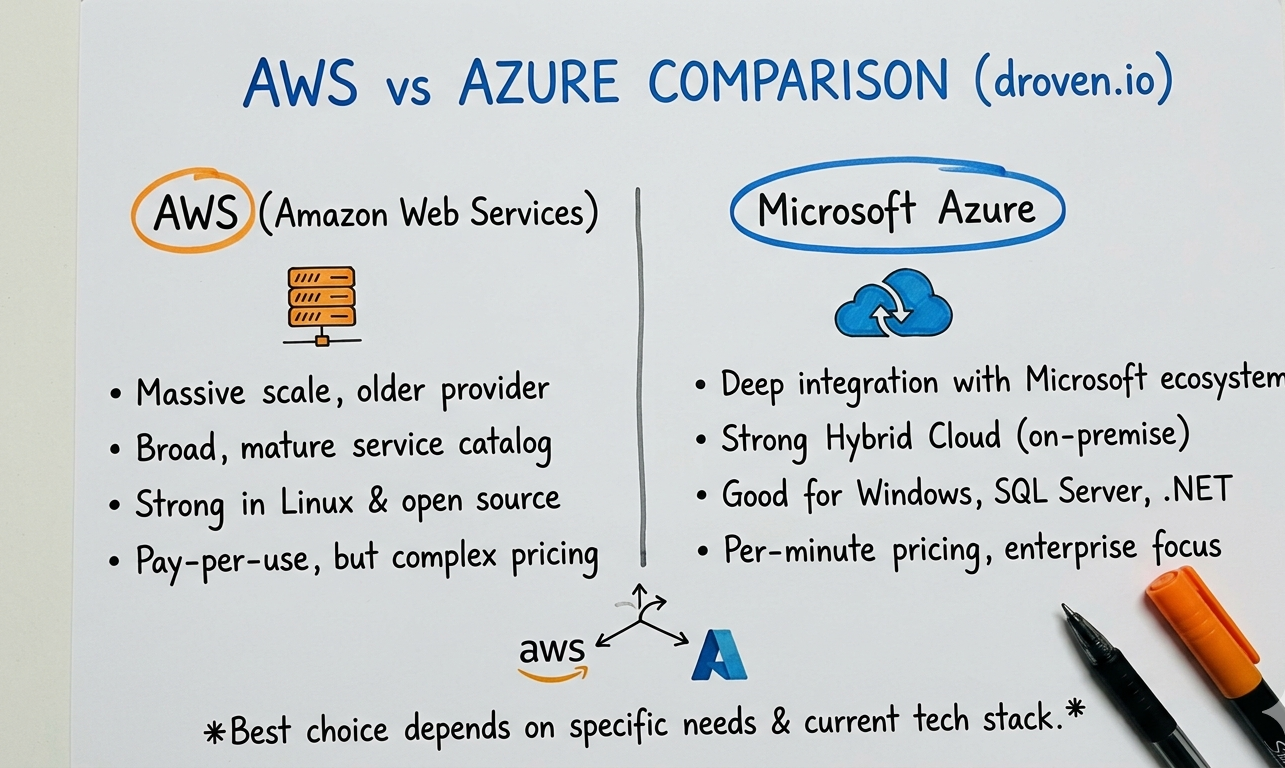
The cloud computing landscape continues to evolve rapidly, and businesses today face an important decision when selecting the right cloud provider. One of the most searched topics among IT professionals, developers, and business leaders is the droven io aws vs azure comparison because choosing the right platform can significantly impact performance, scalability, security, and overall costs. Both Amazon Web Services (AWS) and Microsoft Azure dominate the cloud industry, offering powerful services designed to support organizations of every size.
When companies begin their cloud journey, they often find themselves comparing these two giants. AWS has long been recognized as the pioneer of public cloud services, while Azure has experienced remarkable growth due to its strong integration with Microsoft’s ecosystem. Understanding the strengths and weaknesses of each platform is essential for making an informed decision.
This detailed comparison explores AWS and Azure across multiple areas, including pricing, performance, security, scalability, services, and business suitability. By the end of this guide, you’ll have a clearer understanding of which cloud provider aligns best with your organizational goals.
Understanding Droven io AWS vs Azure Comparison
Amazon Web Services, commonly known as AWS, was launched in 2006 and quickly became the market leader in cloud computing. It offers hundreds of cloud services ranging from virtual servers and storage solutions to machine learning and artificial intelligence tools. AWS has established a massive global infrastructure and serves millions of customers worldwide.
Microsoft Azure entered the market in 2010 and has steadily gained market share. Leveraging Microsoft’s long-standing enterprise relationships, Azure became a preferred choice for organizations already using Windows Server, Microsoft 365, SQL Server, and other Microsoft technologies. Its seamless integration with existing Microsoft products provides significant value for many enterprises. Droven io AWS vs Azure Comparison.
In the ongoing droven io aws vs azure comparison discussions, one key observation remains consistent: both platforms are highly capable and continue investing heavily in innovation. Rather than determining a universal winner, the better approach is identifying which platform best matches specific business requirements.
Market Presence and Industry Adoption
AWS continues to hold a leading position in the cloud computing market. Its extensive customer base includes startups, government agencies, multinational corporations, and technology companies. Many organizations appreciate AWS’s maturity, broad service portfolio, and proven reliability. Droven io AWS vs Azure Comparison.
Azure has narrowed the gap considerably in recent years. Large enterprises often favor Azure because of its familiarity and integration with Microsoft technologies. Organizations that already rely on Active Directory, Windows environments, and Microsoft productivity tools frequently find Azure easier to adopt.
Another important factor is industry specialization. AWS has traditionally maintained strong adoption among technology startups and cloud-native businesses, while Azure enjoys substantial success in enterprise environments, healthcare, finance, education, and government sectors. This diversity highlights how both providers have developed unique strengths. Droven io AWS vs Azure Comparison.
Service Offerings and Features
One of AWS’s greatest advantages is the sheer number of services available. AWS provides solutions for computing, networking, databases, analytics, machine learning, Internet of Things (IoT), serverless computing, and much more. Its ecosystem continues expanding, giving businesses access to cutting-edge technologies. Droven io AWS vs Azure Comparison.
Azure also offers an impressive portfolio of services that closely compete with AWS. Microsoft has invested heavily in artificial intelligence, hybrid cloud solutions, and enterprise management tools. Azure’s services are often designed with enterprise integration in mind, making them attractive to large organizations. Droven io AWS vs Azure Comparison.
While AWS may offer a broader service catalog, Azure excels in integrating cloud services with on-premises infrastructure. Companies operating hybrid environments frequently appreciate Azure’s flexibility and management capabilities. Therefore, the best choice often depends on whether service breadth or integration capabilities are more important.
Performance and Global Infrastructure
Cloud performance largely depends on the provider’s infrastructure footprint. AWS operates one of the largest cloud networks globally, with numerous regions and availability zones distributed across continents. This extensive presence enables businesses to deploy applications closer to users, reducing latency and improving responsiveness.
Azure has also expanded aggressively, building a vast network of data centers worldwide. In certain regions, Azure even maintains a stronger local presence than AWS, providing organizations with additional deployment options and compliance benefits.
Performance benchmarks often show both platforms delivering excellent results. The actual experience depends on workload design, resource allocation, and optimization strategies. Most businesses find that either AWS or Azure can meet demanding performance requirements when configured correctly. Droven io AWS vs Azure Comparison.
Security and Compliance Capabilities
Security remains one of the most important considerations when selecting a cloud provider. AWS invests billions annually in security technologies and offers a comprehensive range of protection tools. Features such as identity management, encryption, threat detection, and security monitoring help organizations safeguard sensitive information.
Azure follows a similarly robust approach. Microsoft has built extensive security frameworks that align with enterprise requirements. Azure Security Center, Microsoft Defender integration, and advanced identity management capabilities provide organizations with strong protection against modern cyber threats. Droven io AWS vs Azure Comparison.
Compliance certifications also play a major role in cloud adoption. Both AWS and Azure support numerous international compliance standards, making them suitable for highly regulated industries. In most cases, security is not a deciding factor because both providers maintain exceptionally high standards.
Pricing and Cost Management
Pricing often becomes one of the most debated topics in any droven io aws vs azure comparison. AWS follows a pay-as-you-go model, allowing organizations to pay only for resources consumed. It offers various pricing options, including on-demand instances, reserved instances, and savings plans.
Azure uses a similar consumption-based pricing structure. However, organizations already invested in Microsoft products may benefit from Azure Hybrid Benefits and licensing discounts. These incentives can significantly reduce cloud costs for enterprises running Microsoft workloads.
Cost management ultimately depends on usage patterns. AWS may offer cost advantages in certain scenarios, while Azure may prove more economical in others. Businesses should conduct detailed workload assessments rather than relying solely on published pricing comparisons. Droven io AWS vs Azure Comparison.
Hybrid Cloud and Multi-Cloud Support
Hybrid cloud adoption continues growing as organizations seek flexibility between on-premises infrastructure and public cloud environments. Azure has traditionally held a strong advantage in this area. Microsoft designed many Azure services specifically to support hybrid deployments, enabling smooth integration between local data centers and cloud resources.
Azure Arc and Azure Stack are notable examples of Microsoft’s hybrid strategy. These solutions allow organizations to manage resources across multiple environments from a unified platform. Businesses with significant on-premises investments often find Azure particularly appealing. Droven io AWS vs Azure Comparison.
AWS has responded by introducing services such as AWS Outposts and hybrid management tools. While AWS has made substantial progress, Azure still enjoys a reputation as a leading hybrid cloud provider among many enterprise customers.
Artificial Intelligence and Machine Learning
Artificial intelligence has become a major focus area for cloud providers. AWS offers a wide range of AI and machine learning services that support everything from predictive analytics to natural language processing. Its machine learning ecosystem appeals to data scientists and developers seeking flexibility and customization. Droven io AWS vs Azure Comparison.
Azure has gained considerable attention due to Microsoft’s investments in AI technologies and partnerships. Azure AI services, cognitive tools, and integration with advanced language models provide businesses with powerful capabilities for automation and innovation.
The competition in AI is extremely close. AWS offers exceptional depth and flexibility, while Azure delivers strong integration and accessibility. Organizations should evaluate specific use cases when comparing AI capabilities between the two platforms.
Developer Experience and Ease of Use
Developers play a critical role in cloud adoption, making user experience an important consideration. AWS provides extensive documentation, training resources, and developer tools. However, newcomers sometimes find AWS’s vast ecosystem overwhelming due to the number of available services. Droven io AWS vs Azure Comparison.
Azure generally offers a more familiar experience for organizations already using Microsoft technologies. Its interface, management tools, and integrations often reduce the learning curve for IT teams accustomed to Microsoft products.
Neither platform is universally easier to use. The preferred choice often depends on existing technical expertise and organizational workflows. Teams with AWS experience may favor AWS, while Microsoft-centric organizations may find Azure more intuitive.
Which Platform Should Your Business Choose?
The answer depends entirely on your business objectives and technical environment. AWS is often an excellent choice for startups, technology companies, and organizations seeking maximum service variety. Its mature ecosystem, innovation pace, and global infrastructure make it a powerful option for cloud-native applications. Droven io AWS vs Azure Comparison.
Azure is frequently the preferred choice for enterprises deeply invested in Microsoft’s ecosystem. Organizations that rely on Windows Server, Active Directory, SQL Server, and Microsoft 365 can benefit significantly from Azure’s integration capabilities and licensing advantages.
Some businesses even adopt multi-cloud strategies, leveraging both AWS and Azure to optimize performance, resilience, and vendor flexibility. As cloud technologies continue evolving, the focus is shifting from selecting a single provider to building architectures that maximize business value.
Final Thoughts
The debate surrounding droven io aws vs azure comparison continues because both cloud providers offer world-class services and capabilities. AWS remains the market leader with unmatched service breadth and cloud maturity, while Azure continues gaining momentum through enterprise integration, hybrid cloud strengths, and AI innovation.
Rather than asking which platform is universally better, organizations should evaluate their existing infrastructure, budget, technical expertise, compliance requirements, and long-term goals. Both AWS and Azure have proven capable of supporting businesses ranging from small startups to global enterprises.
In 2026, the cloud computing landscape is more competitive than ever. Whether you choose AWS, Azure, or a combination of both, success ultimately depends on strategic planning, effective implementation, and continuous optimization. The best cloud platform is the one that aligns most closely with your organization’s unique needs and future vision.
You May Also Read: Red Lobster CEO

