


Introduction
Creating the perfect team in Destiny Child is one of the most important parts of progressing through the game successfully. With hundreds of characters available, each offering unique abilities, buffs, debuffs, and combat styles, understanding which units perform best can make a massive difference. That is why the Destiny Child tier list has become such an important topic within the game’s community.
A tier list helps players identify the strongest characters for different game modes such as PvP, World Boss, Narrative Dungeons, Raids, and regular story progression. While every player may have personal favorites, certain characters consistently outperform others because of their versatility, damage output, survivability, or support utility. Choosing the right Childs can significantly improve your gameplay experience.
Another reason tier lists are so popular is because Destiny Child Tier List constantly evolves. Balance updates, new characters, and changing metas can shift which units dominate the game. A character considered average one season might become extremely powerful later due to buffs or new team combinations. Understanding these changes helps players invest their resources wisely.
What Is Destiny Child Tier List?
Destiny Child is a mobile RPG known for its stylish artwork, fast-paced combat, and strategic team-building system. Developed by Shift Up, the game combines anime-inspired visuals with deep gameplay mechanics that reward smart decision-making and proper character synergy.
The game revolves around collecting “Childs,” which are characters with different roles such as attackers, defenders, supporters, debuffers, and healers. Each Child has unique abilities that influence battles in different ways. Some excel at dealing massive damage, while others focus on healing teammates or controlling enemies.
One reason Destiny Child Tier List became so popular is because it appeals to both casual players and competitive gamers. Beginners can enjoy the story and character collection aspects, while advanced players dive deeply into optimizing stats, gear, and team compositions for high-level content.
Understanding the Tier List System
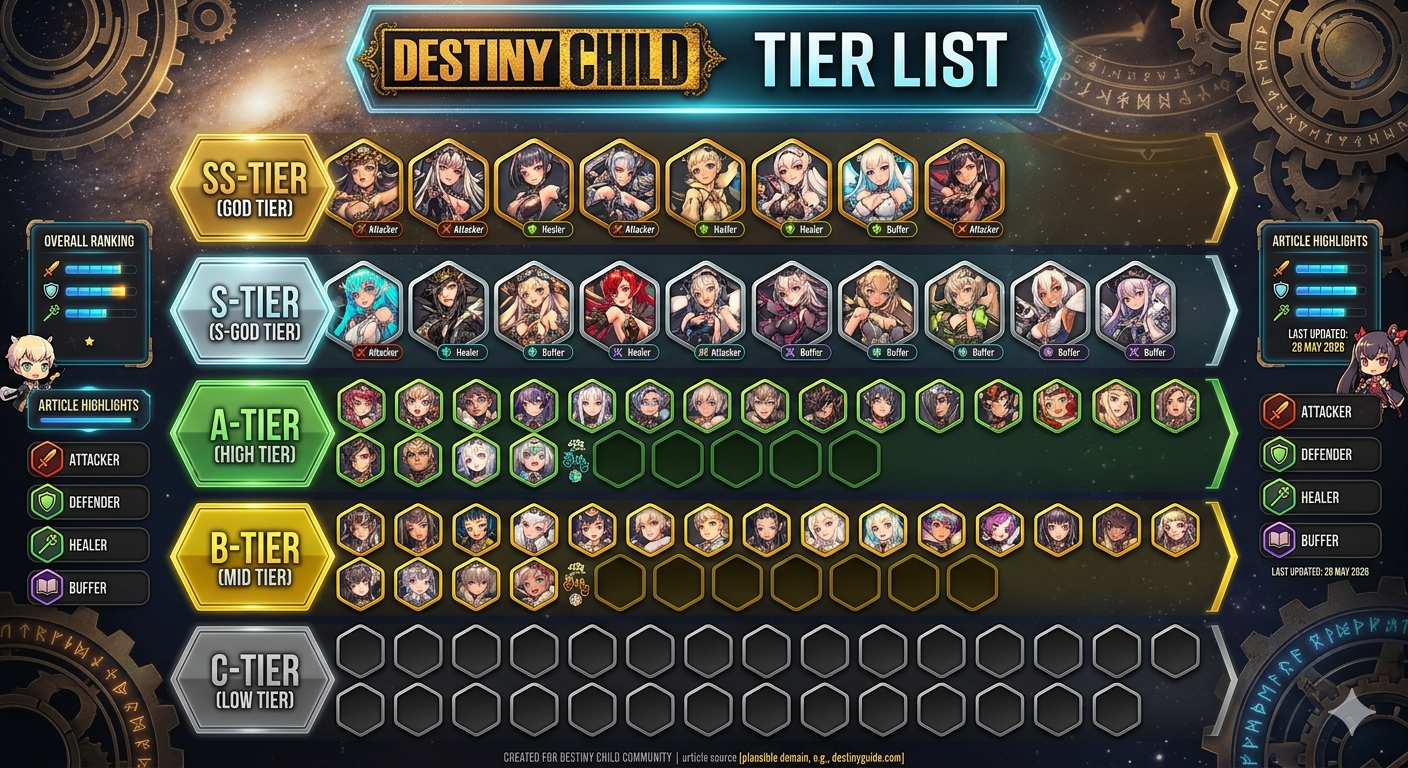
A Destiny Child tier list usually ranks characters into categories such as S-Tier, A-Tier, B-Tier, and lower. S-Tier characters are considered the strongest and most reliable choices in the current meta. These units typically perform exceptionally well across multiple game modes and fit into many team compositions.
A-Tier characters are still extremely strong but may require better setups or specific team combinations to maximize their effectiveness. Many A-Tier units can still compete with top-tier characters when used correctly.
B-Tier and lower characters are usually more situational. They may perform well in certain modes or niche strategies but often struggle to compete consistently with stronger units. However, that does not mean they are useless. Some players enjoy experimenting with underrated characters and finding creative strategies that work surprisingly well.
S-Tier Characters in Destiny Child (Destiny Child Tier List)
S-Tier characters dominate the meta because they combine strong abilities with consistency and versatility. These units are often considered must-have picks for competitive gameplay and difficult PvE content. Destiny Child Tier List.
Support characters frequently appear in S-Tier because buffs and healing are incredibly valuable in Destiny Child. Units that increase attack power, boost speed, or provide immunity effects can completely change the outcome of battles. Strong supports allow damage dealers to perform at their highest level while keeping the team alive. Destiny Child Tier List.
Top attackers also deserve S-Tier recognition because raw damage remains critical in many game modes. Characters capable of delivering burst damage or applying devastating debuffs often become essential for raids and PvP matches. Their ability to eliminate threats quickly gives teams a huge advantage.
Defenders and tanks can also earn S-Tier status when they provide exceptional survivability. Strong defensive characters protect weaker allies and absorb incoming damage efficiently, making them valuable for extended battles and difficult boss fights. Destiny Child Tier List.
Best Attackers in the Game
Attackers are often the most exciting characters because they deliver huge damage numbers and flashy abilities. A powerful attacker can completely carry a team through difficult content when properly supported.
Critical-hit focused attackers are especially popular because they scale incredibly well with buffs and gear optimization. These characters can eliminate enemy threats rapidly, particularly in PvP environments where fast eliminations matter greatly. Destiny Child Tier List.
Area-of-effect attackers are another major part of the meta. These units can damage multiple enemies simultaneously, making them excellent for farming stages and clearing waves quickly. In modes like World Boss battles, AoE attackers become even more valuable due to their ability to hit several targets at once.
Some attackers specialize in damage-over-time effects such as poison, burn, or bleed. While they may not produce immediate burst damage, their sustained pressure can slowly overwhelm enemies in longer fights. Destiny Child Tier List.
Best Support Characters
Support units are arguably the backbone of most successful Destiny Child Tier List teams. Without strong support, even the best attackers can struggle to survive or maximize their potential.
Healing characters remain extremely important because many battles involve heavy incoming damage. Reliable healers keep the team alive while allowing attackers to focus on dealing damage rather than survival.Destiny Child Tier List.
Buff-oriented supports are equally valuable. Characters that increase attack speed, critical rate, defense, or skill cooldown reduction can massively improve overall team performance. These buffs often determine whether a team succeeds or fails in high-level content.
Debuff-cleansing supports also hold a major role in competitive gameplay. Enemy debuffs can cripple a team quickly, especially in PvP. Characters capable of removing harmful effects provide stability and protection during difficult encounters.
PvP Tier List Analysis
Player-versus-player combat in Destiny Child Tier List requires a different approach compared to PvE modes. Speed, burst damage, and crowd control become far more important because battles are usually decided very quickly.
Fast attackers and aggressive debuffers often dominate PvP metas. Characters capable of silencing enemies, reducing defense, or interrupting skills can create immediate advantages. Timing and speed manipulation are critical elements in competitive matches.
Defensive PvP teams also exist and can be incredibly frustrating to fight against. Tank-heavy compositions combined with healing and defensive buffs force opponents into long battles where mistakes become more likely.
Another important factor in PvP is synergy. Even top-tier characters can underperform without proper team support. Building a balanced team with offense, defense, healing, and crowd control usually produces the best results.
PvE and World Boss Rankings
PvE content focuses more on sustained performance rather than quick eliminations. In raids and World Boss battles, players need consistent damage output, survivability, and efficient skill rotations.
World Boss battles especially favor characters with multi-target attacks and long-lasting buffs. Since these fights often involve massive enemy health pools, sustained damage becomes more important than quick burst damage.
Raid-focused teams usually prioritize synergy and optimization. Buff stacking, defense reduction, and coordinated skill timing can dramatically increase total damage output. This is why some characters rise significantly in PvE tier lists even if they are average in PvP.
Survivability also matters more in PvE. Characters capable of healing, shielding, or reducing incoming damage help teams survive extended battles against powerful bosses.
How Meta Changes Affect the Tier List
Destiny Child’s meta changes regularly due to patches, balance adjustments, and new character releases. A single update can completely reshape the tier rankings and introduce new strategies.
Sometimes older characters receive buffs that suddenly make them competitive again. Players who ignored certain units in the past may discover they are now extremely powerful after a balance update.
New characters also influence the meta by introducing unique mechanics or team synergies. Some units completely change how teams are built because their abilities interact exceptionally well with existing characters.
This constant evolution keeps the game fresh and prevents the competitive scene from becoming stagnant. Players must stay informed and adapt their teams as the meta shifts over time.
Tips for Building the Best Team
A strong team is not simply about using five S-Tier characters together. Team balance and synergy matter far more than individual rankings.
Every team should ideally include a mix of attackers, supports, healers, and defensive units. Too much offense without protection can lead to quick defeats, while overly defensive teams may struggle to deal enough damage.
Gear optimization is another crucial factor. Even the best character in the game can feel weak with poor equipment. Enhancing gear, upgrading skills, and improving stats significantly increase overall effectiveness.
Players should also focus on mastering timing and strategy rather than relying only on raw power. Understanding when to use specific abilities and how to counter enemy compositions often separates experienced players from beginners.
Why Tier Lists Should Not Completely Control Your Choices
Although tier lists are useful, they should not dictate every decision you make in Destiny Child. Personal enjoyment still matters, especially in a game built around collecting characters and experimenting with teams.
Some players achieve impressive results using unconventional strategies or underrated units. Creativity and game knowledge can sometimes outperform pure meta chasing.
Additionally, future updates may change rankings dramatically. Investing in characters you genuinely enjoy can make the game more fun and rewarding long-term, regardless of temporary meta shifts.
Tier lists work best as guidelines rather than strict rules. They provide valuable insight into current trends while still leaving room for experimentation and personal playstyle preferences.
Conclusion
The Destiny Child tier list is an essential tool for understanding the game’s evolving meta and identifying the strongest characters for different modes. From powerful attackers and reliable supports to durable defenders and strategic debuffers, each role contributes to building successful teams.
Understanding character strengths, team synergy, and game mode requirements allows players to make smarter decisions and improve their performance significantly. While S-Tier units often dominate the spotlight, proper strategy and teamwork remain just as important as raw character strength.
As Destiny Child continues receiving updates and new content, the tier list will keep evolving alongside the game itself. Staying informed, adapting to meta changes, and experimenting with different team compositions will help players remain competitive while still enjoying everything the game has to offer.
You May Also Read: Tampa Bay Buccaneers vs Detroit Lions Match Player Stats

