


Introduction
Dumbbell back exercises are some of the most effective movements for building strength, improving posture, and creating a balanced physique. While many people focus heavily on chest and arm workouts, the back often gets ignored. That is a big mistake because the back is one of the largest and most important muscle groups in the body. A strong back supports better movement, reduces injury risk, and helps improve overall athletic performance.
One reason dumbbells are so effective for back training is that they allow a greater range of motion compared to many machines. They also force each side of the body to work independently, which helps correct muscle imbalances and improves coordination. Whether you are training at home or in the gym, dumbbells can deliver impressive results without requiring complicated equipment.
Another major advantage is versatility. With just a pair of dumbbells, you can perform dozens of exercises targeting different parts of the back, including the lats, traps, rhomboids, and lower back muscles. This makes dumbbell training suitable for beginners, intermediate lifters, and advanced athletes alike.
Why Back Training Matters
A strong back is not just about appearance. It plays a huge role in daily movement and overall health. Every time you lift, pull, twist, or carry something, your back muscles are involved. Weak back muscles can lead to poor posture, discomfort, and even chronic pain over time.
Modern lifestyles also contribute to back weakness. Many people spend long hours sitting at desks, looking down at phones, or working on computers. This often causes rounded shoulders and tight chest muscles while weakening the upper back. Dumbbell back exercises help reverse these problems by strengthening the muscles responsible for proper posture.
Back training also improves performance in other workouts. Exercises like deadlifts, squats, bench presses, and pull-ups all depend on back stability and strength. When your back becomes stronger, your overall fitness level improves significantly.
Benefits of Dumbbell Back Exercises
One of the biggest benefits of dumbbell back exercises is muscle symmetry. Machines sometimes allow the stronger side of the body to compensate for the weaker side. Dumbbells prevent this by forcing each arm to move independently, helping create balanced strength and muscle development.
Another advantage of Dumbbell Back Exercises is joint-friendly movement. Dumbbells allow natural movement patterns, reducing strain on the shoulders and elbows. This makes them a great option for people who experience discomfort with barbells or fixed machines.
Dumbbell exercises also improve core stability. Since Dumbbell Back Exercises require more control and balance, the core muscles work harder during movements. This means you are not only strengthening your back but also improving overall body stability and coordination.
Best Dumbbell Back Exercises
Dumbbell Bent-Over Row
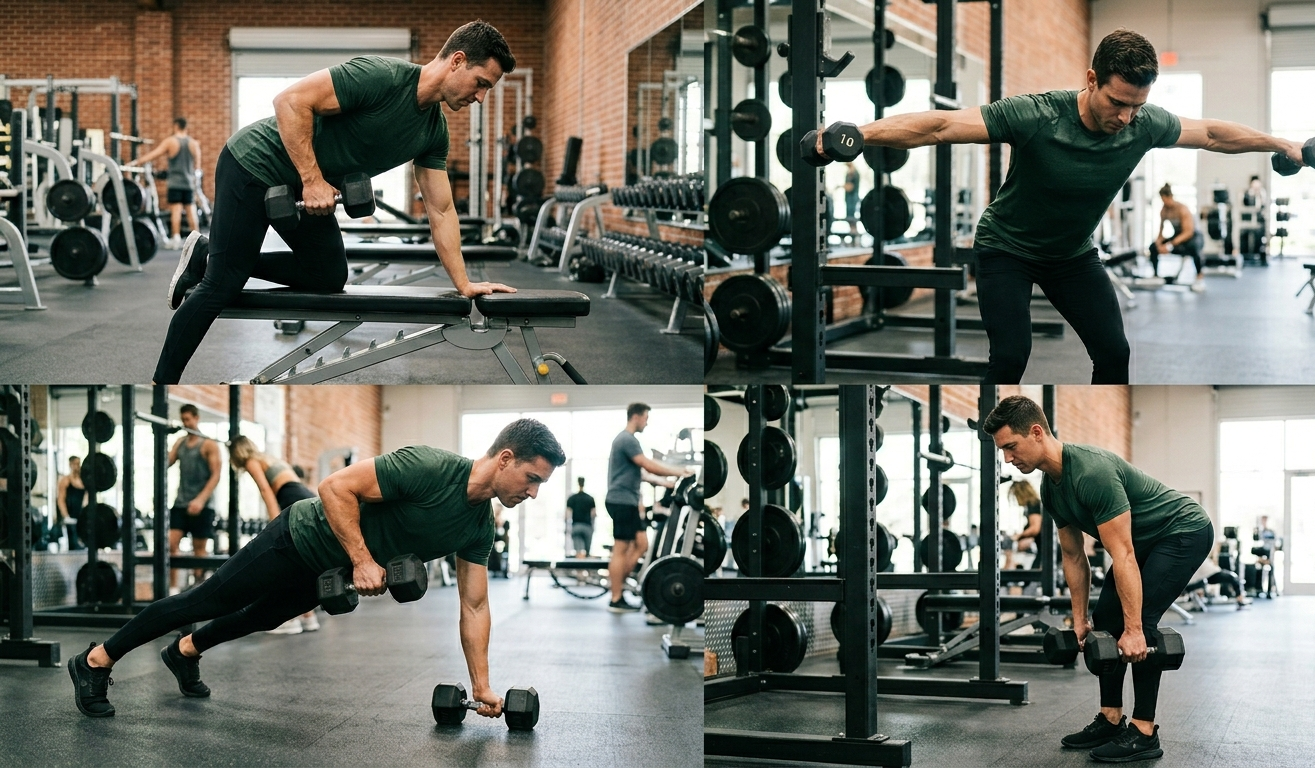
The dumbbell bent-over row is one of the most effective back-building exercises. It primarily targets the lats, rhomboids, and traps while also engaging the biceps and rear shoulders. To perform the movement, hinge at the hips, keep the back straight, and pull the dumbbells toward your waist.
Dumbbell Back Exercises helps create thickness in the upper and middle back. It also improves pulling strength, which is essential for many athletic movements and compound lifts. Controlled repetitions are important because swinging the weights reduces effectiveness and increases injury risk.
One of the best things about bent-over rows is their adaptability. Beginners can start with lighter weights to master form, while advanced lifters can increase resistance for muscle growth and strength gains. Dumbbell Back Exercises.
Single-Arm Dumbbell Row
The single-arm dumbbell row is excellent for isolating each side of the back individually. Place one knee and hand on a bench while rowing the dumbbell with the opposite arm. This setup allows for a deeper stretch and stronger contraction.
Dumbbell Back Exercises is highly effective for developing the lats and improving muscular balance. Since each side works independently, weaknesses become easier to identify and correct. Many trainers consider this one of the best exercises for building a wide back.
Another advantage is reduced lower-back strain compared to some standing row variations. The supported position allows greater focus on squeezing the back muscles properly during each repetition.
Dumbbell Deadlift
Although often associated with leg training, dumbbell deadlifts heavily engage the back muscles as well. The movement targets the lower back, traps, glutes, and hamstrings while improving overall posterior chain strength.
Proper form is extremely important during deadlifts. Keep the chest up, back neutral, and dumbbells close to the body throughout the movement. Avoid rounding the spine because it increases injury risk.
Dumbbell deadlifts are especially useful for beginners because they are easier to control than barbell deadlifts. They help develop foundational strength and improve lifting mechanics for more advanced exercises later.
Dumbbell Reverse Fly
Dumbbell Back Exercises reverse fly mainly targets the rear delts and upper back muscles. This exercise is excellent for improving posture and balancing shoulder development. To perform it, hinge forward slightly and raise the dumbbells outward in a controlled motion.
Many people neglect the rear shoulder and upper back area, which can create muscular imbalances. Reverse flies help strengthen these smaller stabilizing muscles while improving shoulder health.
This exercise is particularly beneficial for people who spend long hours sitting or working at a computer. Strengthening the rear upper body can help reduce rounded shoulders and improve posture over time.
Renegade Rows
Renegade rows combine core stability with back training, making them one of the most challenging dumbbell exercises. Start in a push-up position while holding dumbbells and row one arm at a time without rotating the hips excessively.
This movement works the lats, traps, core, chest, and shoulders simultaneously. Since the body must stay stable during the exercise, the abs and obliques work extremely hard as well.
Renegade rows are excellent for athletes and people looking to improve functional fitness. They build coordination, stability, and strength all at once, making them highly efficient for full-body conditioning.
How to Structure a Dumbbell Back Workout
A good dumbbell back workout should include exercises for both width and thickness. Rows mainly build thickness, while pulling-style movements help create width and definition. Combining multiple movement patterns ensures balanced muscle development.
A sample workout might include:
- Dumbbell Bent-Over Rows – 4 sets
- Single-Arm Rows – 3 sets
- Dumbbell Deadlifts – 4 sets
- Reverse Flies – 3 sets
- Renegade Rows – 3 sets
Rest periods should depend on your goal. Shorter rests improve endurance and fat burning, while longer rests help maximize strength and muscle growth. Consistency is more important than training excessively hard for one session.
Progressive overload is also essential. Gradually increasing weight, repetitions, or training intensity forces the muscles to adapt and grow stronger over time.
Common Mistakes During Dumbbell Back Training
One common mistake is using momentum instead of muscle control. Many people swing the weights or jerk their bodies during rows, which reduces tension on the back muscles. Slow and controlled repetitions produce much better results.
Another issue is lifting weights that are too heavy. While challenging resistance is important, poor form can increase injury risk and limit muscle activation. Choosing manageable weights allows proper technique and better long-term progress.
Ignoring mind-muscle connection is another problem. Back muscles can sometimes be harder to “feel” during exercises compared to arms or chest muscles. Focusing on squeezing the shoulder blades and engaging the lats during each repetition helps improve muscle activation.
Tips for Faster Back Growth
Consistency is the biggest factor in building a stronger back. Training once in a while will not produce noticeable changes. Regular workouts combined with proper recovery lead to the best long-term results.
Nutrition also matters. Muscles need protein, carbohydrates, and healthy fats to recover and grow. Eating enough protein after workouts supports muscle repair and strength development.
Sleep is another critical factor. During sleep, the body repairs damaged muscle tissue and restores energy levels. Poor recovery can slow progress and reduce workout performance.
Can You Build an Impressive Back with Only Dumbbells?
Absolutely. Many people underestimate how effective dumbbells can be for muscle growth. While machines and barbells are useful, dumbbells offer enough resistance and movement variety to build an impressive back.
The key is exercise selection and progressive overload. As long as you continue challenging the muscles with proper intensity and consistency, dumbbells can produce excellent results for both strength and aesthetics.
Dumbbells are also practical for home workouts. You do not need a massive gym setup to train effectively. A pair of adjustable dumbbells can provide years of effective back training from home.
Conclusion
Dumbbell back exercises are one of the best ways to build strength, improve posture, and develop a balanced physique. They are versatile, effective, and accessible for nearly every fitness level. From bent-over rows to renegade rows, these movements target multiple back muscles while also improving stability and coordination.
Training the back consistently not only enhances physical appearance but also improves daily movement and athletic performance. A stronger back supports better posture, reduces injury risk, and creates a more powerful body overall.
Whether you are a beginner starting your fitness journey or an experienced lifter looking to improve your physique, dumbbell back exercises can deliver outstanding results. With proper form, consistency, and smart progression, you can build a strong, healthy, and well-defined back using nothing more than a pair of dumbbells.
You May Also Read: Military Calisthenics

