


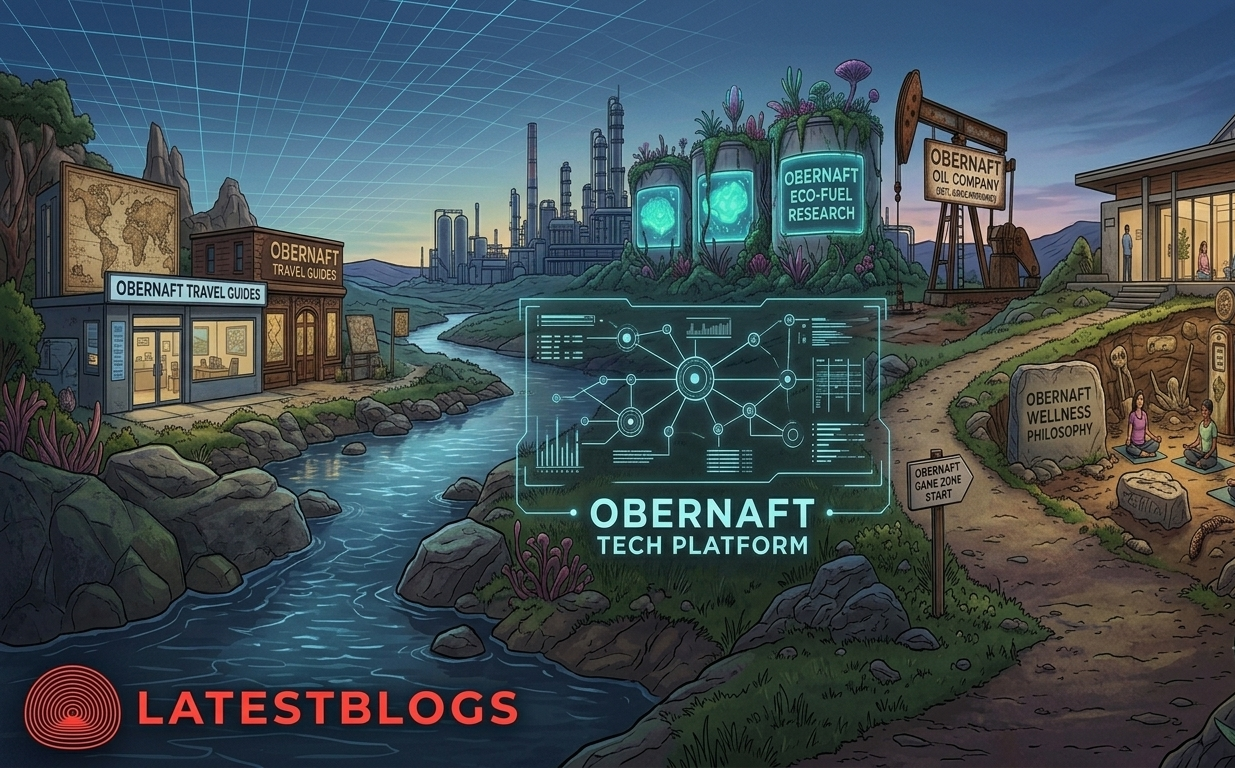
If you’ve searched Obernaft expecting one clear answer, you’re about to see something unusual, this exact term to seven or eight sources, and you’ll get seven or eight entirely different, mutually exclusive definitions. This article breaks down what’s actually happening with this keyword, why the contradictions are so extreme compared to typical misinformation, and how to recognize this kind of manufactured content the next time you run into it.
The Six Completely Different Things Obernaft Supposedly Is
Here’s where this case becomes genuinely unusual compared to most manufactured search terms. One article describes Obernaft as a decentralized digital platform giving users control over their data and content without a centralized authority, complete with cloud scalability and open API access for developers. Another describes it as an ancient philosophical principle with roots in ceremonies and rituals, now adopted by businesses and wellness programs to improve mindfulness and productivity. A third frames it as a video game with rogue, warrior, and mage character classes that players choose between based on playstyle preferences.
The contradictions don’t stop there. A separate site describes Obernaft as a travel and lifestyle guide covering German mountain inns and Alpine hospitality, complete with a fabricated statistic citing a “2022 study by the German Culinary Institute” claiming traditional Alpine dishes contain 30 percent more protein than standard European fare, a citation that cannot be independently verified anywhere. Yet another article claims it is a company revolutionizing the oil industry through sustainable extraction technology and data analytics. And finally, a completely different article describes it as an eco-friendly alternative fuel you can mix into your gas tank at a 10 to 30 percent ratio, citing unattributed studies claiming a 30 percent reduction in greenhouse gas emissions.
Take a moment to actually absorb how incompatible these descriptions are. A decentralized data platform, an ancient wellness philosophy, a fantasy video game, a German travel guide, an oil extraction company, and a fuel additive are not six facets of the same thing, they’re six entirely unrelated concepts that happen to share a made-up brand name. No legitimate company, product, or concept gets described this inconsistently across independent sources, because a real thing has one actual identity that doesn’t change depending on which website happens to be writing about it.
Why This Case Is More Extreme Than Typical Manufactured Keywords
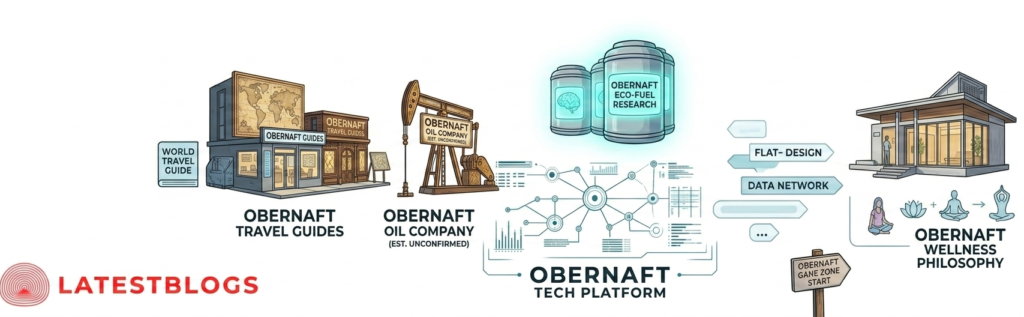
Most fabricated search terms at least stay within one general theme, a fake tech platform gets described slightly differently by different sites, but it’s still consistently a tech platform. Obernaft breaks that pattern entirely, spanning technology, gaming, wellness philosophy, travel, and energy industries simultaneously. This suggests something specific about how this term likely originated, probably as a randomly generated or algorithmically assigned brand-sounding word that got fed into multiple unrelated AI content generation pipelines, each one instructed to write about a completely different topic without any awareness of what other content already existed under the same name.
This pattern points toward large-scale, automated content farming rather than a single source of misinformation spreading and mutating over time. When a fabricated term stays within one theme, it usually means one original article set a loose premise that other sites then copied and slightly altered. When a term explodes into totally unrelated industries like this, it more likely means the word itself was treated as an interchangeable placeholder, a brandable-sounding string of letters that dozens of disconnected content operations independently decided to build unrelated articles around, each optimizing for a different search niche without any coordination or fact-checking.
The presence of fabricated supporting details makes this even clearer. The oil industry article and the fuel article both use classic manufactured-authority techniques, vague references to “studies” and specific-sounding percentages, 30 percent emission reduction, 30 percent more protein, without naming an actual study, sample size, publisher, or any way to verify the claim. These specific numbers exist to make the claims feel more credible than a vague statement would, but a percentage attached to no named source is not data, it’s a rhetorical device borrowed from legitimate science communication and applied here with nothing real behind it.
How A Single Nonsense Word Ends Up Everywhere At Once
Understanding the mechanics here helps explain why this keeps happening across the internet more broadly. Content generation tools have made it extremely cheap to produce a fully structured, professional-sounding article about literally anything, including a word with no established meaning. If a content creator, or more likely an automated content pipeline, is simply told “write an article about it as if it’s a video game” or “write about Obernaft as an eco-fuel,” the resulting text will read confidently and coherently regardless of whether Obernaft means anything at all in reality.
Search engines historically reward detailed, well-structured content, particularly for terms with little existing competition, and a completely made-up word by definition starts with zero legitimate competing content. This creates an unusual incentive structure where multiple, entirely unrelated content operations can all target the exact same nonsense term for entirely different niches without ever stepping on each other’s turf, since a search engine might surface the gaming article for one person’s query intent and the fuel article for another’s, without either page ever needing to reconcile its claims against the other.
This also explains why one of the actual obernaft.net pages found in this research reads as a strange mashup itself, part gaming community hub, part European travel blog, referencing “obernaft” as if it were the author’s own established personal brand while describing completely unrelated German mountain inns in one section and gaming character builds in another. This kind of internal incoherence, even within a single website, is a strong indicator that this content wasn’t written with any real underlying subject in mind at all, it was generated to fill space around a keyword rather than to describe something that actually exists.
The Real Risk In Treating Any Of This As Factual
The most immediate risk here is fairly obvious for readers who stumble onto just one of these articles without realizing the wider contradiction exists. Someone researching “Obernaft” for a school project, a purchase decision, or general curiosity might read only the oil industry piece or only the eco-fuel piece, take its confident tone and specific statistics at face value, and walk away believing something completely fabricated is an established company or product, simply because they never encountered the other five contradictory versions of the same term.
There’s also a subtler risk worth naming, the erosion of trust in search results generally. When someone eventually does discover the contradiction, by searching more broadly and finding wildly different descriptions, it understandably makes them more skeptical of search-based research overall, even for topics where the information genuinely is reliable. This kind of large-scale, multi-niche keyword fabrication contributes to a broader problem where distinguishing legitimate information from confidently written filler becomes harder for everyone, not just for obscure or invented terms.
For anyone using AI tools or hiring content writers to produce material, this case is also a useful cautionary example in the other direction. Generating an article about a topic without verifying whether that topic actually exists or means what you assume it means is exactly how this kind of contradictory, embarrassing content ends up published under a real business’s name. A quick search checking whether multiple independent, reputable sources agree on a term’s meaning before writing about it takes a few minutes and prevents publishing something that could later be pointed to as an example of exactly this problem.
How To Quickly Spot A Nonsense Keyword Like This One
The fastest verification check for a term like it is deliberately simple, search the exact term alongside two or three different topic guesses and see whether the results agree with each other. If searching “Obernaft technology” and “Obernaft fuel” and “Obernaft game” each turn up seemingly confident, detailed articles describing three unrelated things, you’ve found your answer immediately, this is not a real, singular product or concept, regardless of how professionally written any individual article sounds.
A second useful check is looking for the term in genuinely authoritative, centralized sources, established dictionaries, major news outlets, industry-specific trade publications, or official regulatory or business registries relevant to whatever industry the term claims to belong to. A real oil industry company, for instance, would appear in energy sector trade press, corporate registries, and industry association materials, not just a single blog post with no other corroborating source anywhere in that specific industry’s actual media ecosystem.
Finally, treat unattributed statistics as a standing red flag regardless of which version of a fabricated term you’re reading. Any claim citing a percentage, a study, or a specific data point should be traceable to an actual named source, a specific research institution, a dated report, a named author, something you could theoretically go verify independently. When that attribution is missing or vague, “various studies indicate,” “according to a 2022 study,” with no further detail, it’s a strong signal that the number was generated to sound credible rather than reported from anything real.
Frequently Asked Questions
What is Obernaft actually?
There’s no verifiable single meaning. Multiple unrelated sources describe it as a tech platform, a wellness philosophy, a video game, a travel guide, an oil company, and an eco-fuel, none of which are independently confirmed to exist.
Why do different websites describe Obernaft so differently?
This pattern suggests the term was used as a placeholder brand name across multiple unrelated, likely automated content operations, each generating content for a different niche without any coordination or fact-checking against other sources.
Is Obernaft a real video game?
There’s no independent verification, such as an app store listing, official developer, or independent gaming press coverage, confirming Obernaft as an actual released video game.
Is Obernaft a real fuel product or oil company?
No credible energy industry sources, regulatory filings, or trade publications confirm Obernaft as a real fuel additive or oil extraction company, and the specific statistics cited in these articles are unattributed.
Why does this matter if it’s just a strange internet oddity?
Readers encountering just one of these articles without realizing the broader contradiction could mistake fabricated claims for real information, particularly concerning for claims about products, fuel additives, or business investments.
How can I tell if a search term like this is fabricated?
Search the term alongside a few different topic guesses. If completely unrelated, contradictory descriptions all appear with equal confidence, that’s a strong sign you’re looking at manufactured content rather than a real, singular concept.
You May Also Read: Game Mods Lyncconf

